Miscellaneous
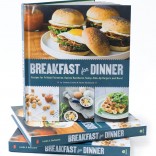
There is no denying that my posts are few and far between. I do have a good excuse though. When I’m not sitting at my sewing machine or at work, you can usually find me in the kitchen. My wife and I love to cook. So much so that we decided to write a cookbook together. We did all of the recipe development, testing, and photography ourselves, and I’m extremely proud of the finished product, even if it meant I had little time to sew during the last twelve months.
So…here it is. Breakfast for Dinner! Doesn’t that phrase just bring a smile to your face? I mean, who doesn’t like breakfast for dinner?

We are giving away five signed copies at my wife’s amazing food blog Love and Olive Oil. She did a pretty cool behind the scenes post about it too, complete with messy kitchen shots, me doing dishes with silly faces, and all kinds of cat shenanigans.
The book is available for pre-order at Amazon currently, and will be hitting the shelves of book stores on February 12th. Also, if you happen to be in Tennessee or the San Francisco bay area, we will be doing a few book signing events soon. Come out and see us. We would love to meet you!
posted January 21, 2013 by Taylor
From time to time I get e-mails from readers who are interested in learning how to make their own clothing. Those who get in touch are usually looking for a starting place or advice on which sewing machine they should buy. Since TaylorTailor is three years old this month, I thought I would try to share my thoughts on the topic. This is mainly intended for those who have never sewn anything before and is in no way comprehensive. You might be disappointed if you are looking for technical advice or a step-by-step guide; buy this model of sewing machine, buy this special book, turn to page 9, and BOOM, you will have a pair of jeans. Instead, what follows are basically the steps I went through to get started. Hopefully it is helpful to others who might be thinking about learning how to sew.
I am in no way an expert, or have any formal training with pattern making or sewing. While I do have an amazingly helpful mentor/teacher here in Nashville, I’ve learned quite a bit on my own as well as from other blogs and websites. I may not do things the way a professional pattern maker or commercial sewing factory would do them, but I do what works for me with the knowledge and equipment I have on hand.
My first bit of advice is that you CAN do this. Don’t let lack of knowledge stop you from trying something new. I had no idea what a bobbin is or what seam allowances are when I started. With that said, making a piece of clothing that looks like it came from a store, that you are proud to wear in public, is hard work. Don’t expect to complete a shirt in a Saturday afternoon or quickly throw together a pair of jeans. This stuff takes time, lots of it, especially if you’ve never sewn before. I don’t mean that last part as discouragement. If your expectations are aligned properly going in, you won’t be disappointed when you’ve spent several weeks on the same project and it still isn’t finished. Take your time, learn as you go, and enjoy the process however long it may be.

1. First, decide what types of garments/accessories you want to make, and try to gauge how committed you are going to be to learning something new. This will have an effect on how much you budget for your first sewing machine and which type of machine you decide to buy.
2. Get a sewing machine. Choosing the right machine really comes down to budget, personal preferences, and in some cases, the types of things you want to make. Here are the machines I use. I can’t make a specific recommendation for a machine that will work for every beginner, especially if I’ve never used it myself. Sewing machines generally fall into two categories, those made for “domestic” or “household” use, and industrial sewing machines.
- Pros of household/domestic sewing machines: portable, take up little space, most can do a variety of stitch types, they are versatile.
- Cons of household/domestic sewing machines: lack power and speed, not ideal for really heavy materials, they can be less durable, although I’m sure a good household machine that is properly cared for can last quite a few years.
- Pros of industrial sewing machines: powerful, retain power even at low speeds, ability to sew very fast, heavy duty (note: this doesn’t mean that they can all sew heavy duty materials. Depending on the machine, they can be set up for light or heavy work), made to do one task (such as a straight lockstitch) and do it really well.
- Cons of industrial sewing machines: uni-taskers – generally they can only do one type of stitch, need different machines to do different types of stitches (straight, zig zag, bar tack, etc.) not portable, weigh a lot, need dedicated place to put them.
I’ve never had any problems with my industrial machine. The thing just works, and it works every time I turn it on. No fuss, no babying it, no mechanical issues. All other things being equal, if you have the space and the budget (a simple industrial can be cheaper than a complicated domestic) I would recommend an industrial sewing machine. Again, this is a personal preference, and after researching machines you might come to a different conclusion.
3. Learn how to use your machine. If you don’t have a friend or relative to show you the basics, I would suggest checking out a local fabric/sewing supply store. If they don’t offer classes for beginners, they are likely to know someone who offers private lessons who can get you started. Once you know a few basic things like how to adjust the thread tension, how to wind a bobbin, how to back tack, and how to change a needle, you are ready to start with your first project.
4. Keep it simple for your first couple of projects. I wanted to start with a three piece suit when I first got interested in sewing. My wife talked me down and convinced me to start with an apron. I’m glad she did. I’ve been sewing for three years and I’m still not ready to tackle something like a mens suit. There are lots of commercial patterns available for beginners. With these simple projects you will develop your sewing skills, continue to learn the quirks of your machine, and get a feel for what you like and don’t like to sew.
5. After “suffering” though a few aprons or pairs of pajamas, choose a project that is a little more complicated, something that might eventually turn into a piece of clothing you wear in public. For me, this was a pair of jeans. You might find a commercial pattern for this project, or you might want to make your own pattern. Besides having a genuine interest in learning how to design and make my own patterns, I also decided to do so out of necessity. The commercial pattern business really seems to focus a lot more on women’s clothing, which makes sense given that most of their customers are women. But, for a guy who is interested in making his own clothes this left me with few options for patterns, and I’m extremely picky in terms of fit and style. The book I use to make patterns can be found here.
6. Once you’ve decided on a project and have a pattern in hand, make a test garment, or two, or three. For every new pattern I draft, I make at least two or three test garments out of cheap practice muslin before cutting into nice fabric. With each test garment, I make adjustments to the pattern and modify the fit as needed. There is no sense in ruining a nice piece of fabric with a pattern that doesn’t fit the way you want it to.
As far as learning construction techniques goes, there are TONS of sewing books on the market. Here are the two that I use the most often for shirts and pants: David Coffin- Shirtmaking, David Coffin- Making Trousers for Men and Women. Another great way to learn construction techniques and some pattern making is to inspect store bought clothing. You can learn a lot by turning clothes inside out and inspecting seams, pockets, etc. Then there is good old fashion experience. The more you sew, the more you learn, the more the construction part will become intuitive.
Here are the tools I use the most often:

- Iron/Ironing board- If you are just starting out, the iron/ironing board you currently have is probably fine. At some point though, you will want to invest in a decent quality iron and a nice ironing board. For many projects, you will spend more time pressing than at your sewing machine.
- Chalk wheels(s)- For marking positions on fabric.
- Seam ripper- This will be your best friend when you make a mistake.
- Point turner- Not always essential, but can be helpful turning various kinds of points.
- Rulers/curves- For pattern drafting and measuring during construction.
- Tracing paper- For pattern drafting and modification.
- Pattern weights- I like to use large round washers.
- Rotary cutter and cutting mat- When used with pattern weights, the best way to cut fabric in my opinion.
- Shears/scissors- for trimming seam allowances and other cuts, have a pair for fabric only, no paper, cardboard, or other materials which dull the blades quicker.
- Flexible tape measure- Great for making fit adjustments.
- Pins- To temporarily hold fabric pieces together before sewing. Pins tend to distort fabric, so use them sparingly and only when absolutely necessary.
With the beginning of a new year approaching, this might be the perfect time to start a new hobby and learn how to make your own clothing. As always, feel free to get in touch if I can help in any way.
posted December 29, 2012 by Taylor
All of the clothing I have made so far, as well as the canvas backpack I recently finished, is made out of 100% cotton fabric. Other than wool and linen, cotton is pretty much the standard for all non-athletic menswear, and yet I found myself wondering, how many people (including myself) give any thought to where cotton actually comes from.
The raw materials that go into those neatly stacked bolts of fabric in a fabric store, or the perfectly folded shirts in a retail clothing shop have undergone so much change and processing that they barely resemble their original form. We can’t exactly wear raw cotton fibers, so this processing is necessary, but how many times have you thought of that spread collar, oxford cloth, button-down shirt as a something that started out as a plant?
I decided that I want to know more about where the shirt on my back comes from, or at least learn a little about the plant from which my clothing is derived. So, this past summer I did a little gardening experiment and grew some cotton on my porch.
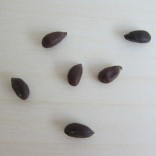
It’s hard to believe that so much of our clothing starts out as these little seeds.

Little baby cotton plants.

When the cotton plant blooms, it has these gorgeous, delicate, yellow flowers that only stick around for a day or two. They quickly turn a light purple color and fall off. From here the cotton bolls start to form.

After a week or two, the bolls begin to open up and you can see the cotton fibers inside.

Once the cotton bolls fully opened and dried out, I removed them from the plant.

There is an old cotton mill about 100 yards from where I live, but unfortunately it is no longer in use. I would love to go see the next step in the fabric production process, where cotton bolls like these ones are turned into something that resembles the fabric we have come to love and depend on.

posted October 16, 2012 by Taylor
After two and a half years of using a free WordPress theme, I’ve finally got myself a brand new custom design for the blog! My first theme wasn’t necessarily bad considering it was free, but my wife and I actually own and run a web and graphic design business. I was long overdue for a, um… “tailored” design. We’ve been so busy the last couple of years (a good thing of course) that we rarely have time to work on personal projects.
While I was off adjusting my shirt pattern this past weekend, my wife surprised me by designing a new theme for Taylor Tailor. Isn’t she awesome? The logo is based off of the vintage Taylor Tailor sign I picked up off of eBay a while back. I now have a wider area for my images, and overall a nice clean, simple look. I couldn’t be happier with it.
In addition to learning how to make my own clothes, I’ve also started learning how to make my own beer! With the new design I’ll be adding a section about my brewing adventures, so don’t be surprised if you see a beer post here and there thrown in amongst the denim, shirts, and other sewing projects.
Now that my content area is wider, I have to re-edit the images I had planned for the backpack I made with the canvas I posted about a few weeks ago. As soon as I re-size the images I’ll get the backpack posted.
posted August 27, 2012 by Taylor
I bought a couple of yards of canvas on sale knowing that I wanted to make a canvas backpack at some point. When it actually came time to make the backpack (post coming soon), I realized that the natural canvas color would quickly get really dirty. I’ll just dye it I thought, it’s easy right?
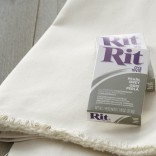
The process is actually pretty easy. The hard part is getting the right color. This was my first time dying anything, and while it was fun, I’ll probably look a little harder for the exact color of fabric I want next time, rather than trying to dye fabric to a certain color. I used a simple, inexpensive dye that you can find at most hobby/craft stores.
*Please note, this post is not meant as an endorsement for Rit dye. It just happened to be the easiest product to find in my area.*

I started with a grey powder dye. If the first dying session had resulted in the color shown on the box, I would have been pretty happy with the outcome.

Unfortunately, the result was a very cool light grey, borderline lavender color. Not exactly what I had in mind for a backpack. I followed the instructions, used two packages of dye, washed the fabric before I started, etc. Maybe my water wasn’t hot enough? Maybe my sink was too small? I’m not sure what went wrong, but I’ll blame my lack of experience rather than the dye.

So…I switched to liquid dye, picked out a “nice” taupe color and repeated the process.

My lavender canvas turned into the color shown below, which is actually fairly close to the color on the bottle, and not a bad choice for a backpack. If I do decide to embark on a dying adventure again, I think I’ll try to seek out a non-conventional, more organic approach and use something like coffee or tea to give plain cotton some color. This will do for now.

I hope to have the backpack I made with this canvas up soon.
posted August 6, 2012 by Taylor
So if your name happens to be Taylor, and you happen to have an interest in learning how to design and “tailor” your own clothes, and you happen to have a blog called TaylorTailor, AND you happen to like vintage signs…
Front

Back

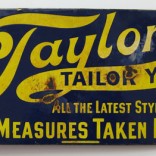
A couple of weeks ago an awesome reader sent me an e-mail about an auction for this sign. As you might expect, I just had to have it. Too perfect to pass up. The sign is from the early 1900′s, and while I can’t find much information about its origin, I believe it was from a company called J.L. Taylor & Co., which was a custom-made clothier in New York and Chicago. If anyone knows more about this company, I would love to know.
I’m going to proudly hang this up in my sewing studio this week…and then get back to work on my jacket pattern!
posted December 8, 2011 by Taylor
I never thought twice about where my clothing came from until I started learning how to make my own clothes. Now I can’t help thinking about how many people are involved, factory conditions (good or bad), and fair wages every time I pick up a piece of clothing. While I am buying less clothing from stores these days, I still think about where the fabric comes from that I use in my projects. I wish there was an easy way to know whether or not a particular company or fabric mill treated their workers and the environment with respect. It would also be nice to know about any hazardous chemicals used in the finishing process on certain fabrics. After reading about the formaldehyde used in non-wrinkle fabrics, I wish there was more transparency in how textiles are made. I would love to know if anyone has suggestions for places to buy fabrics made by reputable companies that have environmentally friendly manufacturing policies.
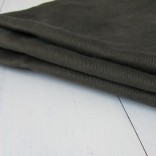
By this point I expected to have my jacket pattern completed and thought I would have at least a muslin version ready to start testing the fit. Right after I posted about starting a jacket, I quickly decided I needed another pair of pants more than I needed a jacket. I made some adjustments to my pattern and just completed another pair of chinos, this time in an olive/gray color. In the next week or so I hope to get some pictures posted. Here is the fabric:

posted August 30, 2011 by Taylor
I took a couple of cross country trips in June and found myself in need of a simple laptop sleeve that would protect my computer while riding around in my carry-on bag. Since I had a ton of denim scraps lying around I threw together this selvedge denim laptop sleeve. There are several companies that make and sell denim laptop sleeves, but most of them open on the side and do not offer a way to completely close the sleeve.
Instead, I opted for an “envelope” style sleeve that allows me to tuck in the flap, which closes the sleeve and offers a little more protection. The inside is lined with a double layer of black corduroy fabric that was also laying around in my stash. While it didn’t turn out exactly as planned, it is perfectly functional and served its purpose as I was on and off planes, taking face plants on the tarmac (I have scars to prove it!), and running across airport terminals.


I am giving denim related projects a little break and moving on to something new. During the next couple weeks, I will start work on a men’s jacket/blazer, which might just be my most ambitious project yet. I’d like to make a somewhat lightweight, unlined or partially lined casual jacket for fall. As of right now I’ve decided to stick with cotton for this first jacket and will most likely use a twill, duck canvas, or maybe even corduroy. My initial plan is for a single breasted, two button jacket with patch pockets.
The pattern will definitely take a while to complete, which is why I’m starting now if I want to have it ready by the fall. I’ve had some trouble finding decent resources for men’s tailoring methods. I have my pattern making book to help out with the pattern and a tailoring book pictured below, which should help some with jacket construction, but wish I could find more resources. The tailoring book is actually for women’s jackets, and while I’m sure a lot of the construction is the same, I wish I could find something more specific to fitting men’s jackets. Eventually I hope to turn this pattern into a more formal sport coat and even a jacket for a suit.

posted July 18, 2011 by Taylor
I love starting new projects.
Raw denim, rolled out and inspected.

Tossed in the tub for a soak. I feel bad holding it under the water against its will.

Hung out to dry in the sun.

Rolled back up, ready to cut.

In case you missed it, here is a little interview I did with Peter from Male Pattern Boldness about denim and making jeans.
posted May 13, 2011 by Taylor
Peter, who runs one of my favorite blogs, Male Pattern Boldness, is organizing a jeans sew along! Starting on Monday, May 2nd, you can follow along step-by-step and learn how to make yourself a pair of jeans. I participated in his Mens Shirt Sew Along earlier this year and had a blast. There was a mix of beginners and experienced sewers, which I’m sure will be the case with the Jeans Sew Along. For the Shirt Sew Along he set up a Flickr group so people could post pictures of their project, ask questions to the group, and share information.
Peter is very entertaining and fun to read. He makes men’s as well as women’s clothing. Plus, you can find a large sewing community at his blog with people who are making really interesting projects. It is a great place to learn new things and connect with like minded sewers. I have learned a lot from him, and highly recommend his blog to anyone interested in sewing.
So if you have ever wanted to make yourself a pair of jeans, the time is now! Get over to Peter’s blog and check it out. It is completely free other than your materials, which brings me to some big news.
I’ve decided to open a little Supply Shop specifically for those who want to make their own jeans and denim related projects. This has been in the works for a while now and I’m excited to officially make the announcement. My goal is to make this a one stop shop, with all of the supplies to make a quality pair of jeans in one place.
There are a few items in the shop now, and I will be adding more denim options, rivets, buttons, and thread in the coming weeks. Eventually the shop will move to its own website, but for now everything is available on the Supply Shop page above.

I am only stocking products that I actually use myself. The denim is raw, unwashed, Cone Mills selvedge, which is some of the best denim in the world in my opinion. I also have rivets and jeans buttons available that are easily attached with a hammer, no special tools required. The thread is available for pre-order and should be ready to ship by the end of next week.
Please let me know if you have any questions about any of these products or suggestions for the shop. I hope to run into you during the Jeans Sew Along!
posted April 28, 2011 by Taylor
I am a little late to be deciding on goals for the rest of the year in April, but better late than never. Here is a quick list of projects I want to accomplish before the end of the year (or next year in some cases). The first two are already underway and pretty much complete. I’ll post some pictures soon.
Chinos
Light-weight shirts
A pair of jeans for my wife. This project is long overdue and something I should have completed a while ago. I started the pattern, but need to make some adjustments and a couple more muslin test fit garments.
A few ties. These will most likely be casual cotton ties but I haven’t decided yet.
Canvas bag/back pack. I need a simple bag for work that can double as an overnight or weekend getaway bag. I’m not sure if I want more of a duffel bag shape or a back pack shape.
Jacket. The first version will most likely be an unstructured, unlined, informal jacket. Once I have a decent pattern for this, I can turn it into a more formal sport coat or suit jacket with a lining.
Cold weather jacket, pea coat/toggle coat. Again, I have to decide what I want here. This project could easily get pushed to next year, but is definitely something I want to attempt.
Suit. My work environment is extremely casual (I work from home), and I only need to wear a suit once or twice a year. That being said, I love suits and I would like to have a closet full of suits that fit really well. I wouldn’t be surprised if the suit project got pushed into next year as well.
More jeans. You only need one, maybe two good pairs of jeans. The key word being “good.” I am still adjusting my pattern for that perfect fit, and will probably always have plans to work with denim in some form or another. Quality denim is by far my favorite fabric to work with so far.
I could easily change or add things to this list. I may change my mind about some of these projects, but putting some of these goals in writing will make me accountable. If you have any suggestions for things you think I should consider making, let me know.
posted April 8, 2011 by Taylor
Since I’ve been on a leather accessories kick lately, I thought I would post this belt I put together a little while back. I actually won the buckle in a giveaway from my local and totally kick ass microbrewery, Yazoo. You can buy your own buckle here. I picked up a belt blank from the leather supply shop, drilled a few holes, cut it to length, and rounded off the end. Simple as that. Done. New Belt.

This is way more buckle than I am used to, but since I won it, and since the beer is outstanding, I’m really proud of it. The leather is vegetable tanned cow hide, so like my wallet and card case, it will naturally age and take on some color with time.
The best part is that the buckle also doubles as a bottle opener.
posted February 9, 2011 by Taylor