
Where Do Clothes Come From?
I never thought twice about where my clothing came from until I started learning how to make my own clothes. Now I can’t help thinking about how many people are involved, factory conditions (good or bad), and fair wages every time I pick up a piece of clothing. While I am buying less clothing from stores these days, I still think about where the fabric comes from that I use in my projects. I wish there was an easy way to know whether or not a particular company or fabric mill treated their workers and the environment with respect. It would also be nice to know about any hazardous chemicals used in the finishing process on certain fabrics. After reading about the formaldehyde used in non-wrinkle fabrics, I wish there was more transparency in how textiles are made. I would love to know if anyone has suggestions for places to buy fabrics made by reputable companies that have environmentally friendly manufacturing policies.
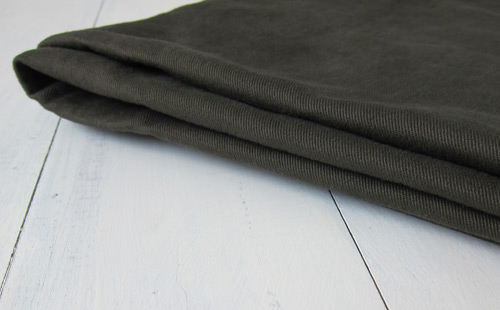
By this point I expected to have my jacket pattern completed and thought I would have at least a muslin version ready to start testing the fit. Right after I posted about starting a jacket, I quickly decided I needed another pair of pants more than I needed a jacket. I made some adjustments to my pattern and just completed another pair of chinos, this time in an olive/gray color. In the next week or so I hope to get some pictures posted. Here is the fabric:
http://www.aurorasilk.com/ is a good place to start. she’s a one-woman crusade, the fabrics are genuinely beautiful, durable and interesting.
http://3hourspast.blogspot.com/2011/01/hemp-for-sewing-not-smoking.html Personally, I find hemp works very well in my climate and lifestyle (working professional in a creative field…) Hemp plants re-invigorate soil after too many years of cotton.
http://www.nearseanaturals.com/browse.php?category=22
I also try to keep an eye out for anything organic. I know it is not a guarantee of good ethics, but it can be a good general indicator. Also, there are ethical clothing websites….
http://www.ethicalclothingaustralia.org.au/home/home
Often, what it boils down to is if you’re buying cheap clothes you’re almost undoubtedly complicit in oppressing someone. I don’t often buy clothing, but when I do I pay a fair price for it based on my knowledge of fabrics and labor times.
Thanks for the post, I haven’t thought about some of this stuff for a while…
Steph,
Thanks for the links. I’ll be sure to check out those sites!
I like to think about this stuff, too. The designers I do know that are very conscientious about where their stuff is manufactured and what textiles are being used tend to be more expensive than many people are willing to pay and so it makes for some hard choices economically. Personally, I find that I am buying less but more quality, designer clothing rather than mass manufactured. It’s even harder to make ethical choices with shoes. Textiles for sewing are hard, too, because most of the time we have no idea where stores source their fabrics.
oh, another fabric store right in your neck of the woods that is very serious about their sourcing and textile production is near sea naturals. They moved their entire business from Santa Fe to Ashville to be closer to their mill. They have some lovely fabrics.
Hi Taylor,
I was happy to see this post appear on your blog, and I wanted to give you a thumbs up for considering the ethical implications of buying certain fabric.
I am only just starting out pattern-making because I wanted to make clothes out of fairtrade or organic cotton/denim, but most of the organic stores were either closed, very limited in stock or didn’t deliver to my area.
However, looking for fabrics which are organic, fairtrade or locally sourced has been tough! There are plenty of places around here which sell fabric, and some of it is lovely, but they source it from the same mills that are also responsible for Wal-Mart and super-budget clothes, so I have had to bid it farewell.
I even got an e-mail reply from one of the managers at a local fabric shop, and he said “We do not plan to source materials ethically in the near future,” which is a pretty weird concession to make.
In terms of knowing if a factory or manufacturer treats its employees with respect, it’s very difficult to judge as each has different internal policies and may or may not have unions and improved working conditions.
But, it’s something you have to do — I would rather make sure that I purchase in a way that prevents further reliance upon underpaid staff in poor working conditions, as the scenes that unfolded in Rana Plaza in Bangladesh were enough to make my stomach turn, particularly when the managers asked the garment workers to go back into the partially-destroyed building to continue making clothes, or face losing pay.
Well, enough of the heavy stuff, anyhoo. So far, I am considering using these two fairtrade companies:
Bishopston Trading Company
http://www.bishopstontrading.co.uk/shop/article.php?category_id=7&article_id=53
Organic Cotton.biz
http://www.organiccotton.biz/store/
Just wanted to give you a big thumbs up from here in Manchester, England. I have been going through your site obsessively over the past couple of days and am looking forward to making my first basic project 🙂
Great work so far!