Projects

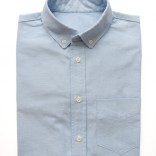
Blue Oxford Cloth Button Down Shirt

blue oxford cloth button down folded shirt

The oxford cloth button down shirt is a staple in many wardrobes. This one is made out of 1oo% cotton with sew-in interfacing for both the collar and cuffs. I used two layers of interfacing in the collar and collar stand for added structure, which may have contributed to somewhat rounded collar points.  Despite trimming close to my seam allowances, the second layer of interfacing adds some extra bulk. Some shirt collars are actually designed to have rounded points, but I am usually shooting for something a little sharper. I like that the rounded corners contribute to a more casual look, but hopefully with practice, I can achieve sharper collar points.

I made a few adjustments to my pattern since the last time I made shirts.

  • Slight adjustment to the curve in the yoke/shirt back seam.
  • Removed a little bit of ease below the armhole along the side seams, and took out a little bit of extra room at center back near the waist line. I’m still trying to find the right balance between too loose and boxy, and an overly slim, tight fit. I want a sharp “tailored” look, but don’t want a shirt that strains and pulls with every move.
  • Lengthened sleeve plackets to make rolling up my sleeves a little easier.
  • Lengthened shirt tails to help keep the shirt tucked in.

blue oxford cloth button down shirt

I would love to hear your favorite techniques and tricks for constructing collars/collar stands, techniques for joining the collar stand to the shirt fronts, and which methods you use to attach cuffs to sleeves. I’ve been using David Coffin’s instructions from his Shirtmaking book where the collar stand is sewn to the neckline before the collar is attached to the stand. He uses a similar method to make cuffs, but I’m always looking for new construction techniques.

Some slouchy, poor posture fit pics.

blue oxford cloth button down shirt fit picture

Jacket Pattern Update

Progress on my jacket project is extremely slow but steady. I’ve managed to throw together another hunk of muslin to quickly test out the basic shell of my men’s jacket pattern. At this point I’m just making sure the collar/lapel pattern pieces actually work together. I’m not concerned about how the collar notches look or how the lapels roll/lay on this test garment. This was my first attempt at making a notched lapel and found it somewhat difficult. I haven’t consulted my tailoring books yet (I should have), but I’d love to hear about any good online resources for notched lapel construction.

From here I need to add some shape to the side seams and center back seam, decide what I want to do for darts, and start the lining pattern.

men's jacket pattern test in muslin

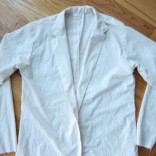
I made a quick list of projects that I hope to complete in 2012. My main focus here is building a wardrobe from scratch so I’m sticking to the basics: shirts, pants, and a jacket.

  • This jacket is a priority, but I may end up making some of these other things below first.
  • Another pair of selvedge denim indigo jeans. My last pair is still doing great, (they are only a year old) but I want to have a fresh crisp pair in the closet
  • A pair of natural selvedge denim (light canvas color) jeans for spring/summer
  • Chinos
    -Light gray
    -Dark gray
    -Khaki
  • At least 2 heavier weight winter shirts
  • At least 2 light weight spring/summer shirts

It seems like a fairly short list for an entire year, but this is more than I completed in 2011. Who knows, maybe I’ll pick up the pace and get even more done!

Negative Space

A whole month has gone by since the last update on my jacket patten, but I promise I really am working on it. A couple in-progress pictures are below. Currently I am working on the lapel roll line and collar. In addition to having less time to work on the pattern lately, the added complexity of jackets makes the drafting process more time consuming than the other patterns I have made.

Mens jacket pattern in progress

Mens jacket pattern front, in progress

In my research on jacket drafting I came across this video, which talks about the process a cutter/tailor goes through in precisely recording every detail of the human body, and how he/she then translates that information onto a paper pattern that can be altered and modified over time. As Nina in the video says, these patterns tell stories. They aren’t just bits of paper. Sometimes good stories can take a while to develop.

Negative Space from FUMF on Vimeo.

New Projects

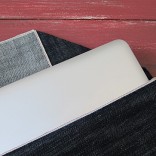
I took a couple of cross country trips in June and found myself in need of a simple laptop sleeve that would protect my computer while riding around in my carry-on bag. Since I had a ton of denim scraps lying around I threw together this selvedge denim laptop sleeve. There are several companies that make and sell denim laptop sleeves, but most of them open on the side and do not offer a way to completely close the sleeve.

Instead, I opted for an “envelope” style sleeve that allows me to tuck in the flap, which closes the sleeve and offers a little more protection. The inside is lined with a double layer of black corduroy fabric that was also laying around in my stash. While it didn’t turn out exactly as planned, it is perfectly functional and served its purpose as I was on and off planes, taking face plants on the tarmac (I have scars to prove it!), and running across airport terminals.

selvedge denim laptop sleeve

selvedge denim laptop sleeve

I am giving denim related projects a little break and moving on to something new. During the next couple weeks, I will start work on a men’s jacket/blazer, which might just be my most ambitious project yet. I’d like to make a somewhat lightweight, unlined or partially lined casual jacket for fall. As of right now I’ve decided to stick with cotton for this first jacket and will most likely use a twill, duck canvas, or maybe even corduroy. My initial plan is for a single breasted, two button jacket with patch pockets.

The pattern will definitely take a while to complete, which is why I’m starting now if I want to have it ready by the fall. I’ve had some trouble finding decent resources for men’s tailoring methods. I have my pattern making book to help out with the pattern and a tailoring book pictured below, which should help some with jacket construction, but wish I could find more resources. The tailoring book is actually for women’s jackets, and while I’m sure a lot of the construction is the same, I wish I could find something more specific to fitting men’s jackets. Eventually I hope to turn this pattern into a more formal sport coat and even a jacket for a suit.

pattern making, tailoring books

Denim Prep

I love starting new projects.

Raw denim, rolled out and inspected.

selvedge denim roll

Tossed in the tub for a soak. I feel bad holding it under the water against its will.

selvedge denim soaking

Hung out to dry in the sun.

selvedge denim drying

Rolled back up, ready to cut.

selvedge denim rolled up

In case you missed it, here is a little interview I did with Peter from Male Pattern Boldness about denim and making jeans.

Men’s Khaki Chinos

Are they chinos, or khakis, or in this case both? I see the names used interchangeably, but I wonder if anybody really  knows. The purists say that “chino” is a type of pant and “khaki” is a color. I say when you know how to make ‘em yourself, you can call them whatever you want to.

Self-drafted pattern
Flat front, button fly, slim fit
100% cotton twill

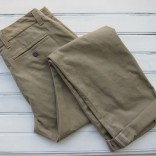
Folded mens chinos

Hanging chinos

First attempt at making welt pockets.

Welt pocket close up

Lined waistband.

Chino button fly

Chino pants back

Chino pants front


MPB Jeans Sew Along and Supplies

Peter, who runs one of my favorite blogs,  Male Pattern Boldness, is organizing a jeans sew along! Starting on Monday, May 2nd, you can follow along step-by-step and learn how to make yourself a pair of jeans. I participated in his Mens Shirt Sew Along earlier this year and had a blast. There was a mix of beginners and experienced sewers, which I’m sure will be the case with the Jeans Sew Along. For the Shirt Sew Along he set up a Flickr group so people could post pictures of their project, ask questions to the group, and share information.

Peter is very entertaining and fun to read. He makes men’s as well as women’s clothing. Plus, you can find a large sewing community at his blog with people who are making really interesting projects. It is  a great place to learn new things and connect with like minded sewers. I have learned a lot from him, and highly recommend his blog to anyone interested in sewing.

So if you have ever wanted to make yourself a pair of jeans, the time is now! Get over to Peter’s blog and check it out. It is completely free other than your materials, which brings me to some big news.

I’ve decided to open a little Supply Shop specifically for those who want to make their own jeans and denim related projects. This has been in the works for a while now and I’m excited to officially make the announcement. My goal is to make this a one stop shop, with all of the supplies to make a quality pair of jeans in one place.

There are a few items in the shop now, and I will be adding more denim options, rivets, buttons, and thread in the coming weeks. Eventually the shop will move to its own website, but for now everything is available on the Supply Shop page above.

I am only stocking products that I actually use myself. The denim is raw, unwashed, Cone Mills selvedge, which is some of the best denim in the world in my opinion. I also have rivets and jeans buttons available that are easily attached with a hammer, no special tools required. The thread is available for pre-order and should be ready to ship by the end of next week.

Please let me know if you have any questions about any of these products or suggestions for the shop. I hope to run into you during the Jeans Sew Along!

Spring/Summer Men’s Shirts

small check gingham men's shirt


light gray Pima cotton men's shirt

The weather is warming up here in Tennessee, and comfort on those hot, humid days is what I had in mind with these shirts. I chose two lightweight warm weather fabrics. The first is a small check blue and white gingham, and the second shirt is made from a light gray Pima cotton. Both are 100% cotton and feature a single pocket on the left hand side. I may end up adding buttons to the collars to make sure they don’t flair out too much, but I want to wear the shirts a bit more to see how the collars naturally fall.

Back in January, I started re-working my shirt pattern  in anticipation of needing a couple of spring/summer shirts. There was too much ease in the back of my first few shirts, which caused them to “poof” when tucked. Overall, I ended up taking out about 2 inches of extra room from the back of my shirt pattern.

Another major change I made was to the length of the shirttails. On my first three shirts, I purposely left the tails somewhat shorter than normal so I could leave the shirts un-tucked and not look like I was wearing a dress. I’ve pretty much decided that un-tucked shirts look sloppy and a little juvenile (maybe I’m getting old?). This time around I lengthened the shirttails to make sure they didn’t pull out when tucked.

I also made a couple of small changes to the collar. I slightly widened the spread of the collar points, and I made the collar taller by about 1/4 inch. Lastly, I took out a little ease from the sleeve, raised the arm hole, and refined the shape of the side seams. While I was happy with the fit of my first shirts, the above  modifications are definitely an improvement.

men's shirt fit picture

I kind of wish I could photoshop that stupid look off my face.

men's shirt fit picture

This picture was taken right after I finished sewing on the buttons. It fits better than depicted above. I should have ironed the shirt first, and it would help if I was standing up straight instead of leaning on that railing.

Laundry List

I am a little late to be deciding on goals for the rest of the year in April, but better late than never. Here is a quick list of projects I want to accomplish before the end of the year (or next year in some cases). The first two are already underway and pretty much complete. I’ll post some pictures soon.

Chinos

Light-weight shirts

A pair of jeans for my wife. This project is long overdue and something I should have completed a while ago. I started the pattern, but need to make some adjustments and a couple more muslin test fit garments.

A few ties. These will most likely be casual cotton ties but I haven’t decided yet.

Canvas bag/back pack. I need a simple bag for work that can double as an overnight or weekend getaway bag. I’m not sure if I want more of a duffel bag shape or a back pack shape.

Jacket. The first version will most likely be an unstructured, unlined, informal jacket. Once I have a decent pattern for this, I can turn it into a more formal sport coat or suit jacket with a lining.

Cold weather jacket, pea coat/toggle coat. Again, I have to decide what I want here. This project could easily get pushed to next year, but is definitely something I want to attempt.

Suit. My work environment is extremely casual (I work from home), and I only need to wear a suit once or twice a year. That being said, I love suits and I would like to have a closet full of suits that fit really well. I wouldn’t be surprised if the suit project got pushed into next year as well.

More jeans. You only need one, maybe two good pairs of jeans. The key word being “good.” I am still adjusting my pattern for that perfect fit, and will probably always have plans to work with denim in some form or another. Quality denim is by far my favorite fabric to work with so far.

I could easily change or add things to this list. I may change my mind about some of these projects, but putting some of these goals in writing will make me accountable. If you have any suggestions for things you think I should consider making, let me know.

Leather Belt With Yazoo Buckle

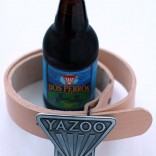
Since I’ve been on a leather accessories kick lately, I thought I would post this belt I put together a little while back. I actually won the buckle in a giveaway from my local and totally kick ass microbrewery, Yazoo. You can buy your own buckle here. I picked up a belt blank from the leather supply shop, drilled a few holes, cut it to length, and rounded off the end. Simple as that. Done. New Belt.

Yazoo Brewery Belt Buckle

This is way more buckle than I am used to, but since I won it, and since the beer is outstanding, I’m really proud of it. The leather is vegetable tanned cow hide, so like my wallet and card case, it will naturally age and take on some color with time.

The best part is that the buckle also doubles as a bottle opener.

Leather Wallet and Card Case

This was my first attempt at working with leather. I needed a less bulky wallet and a way to easily access business cards. The leather, which is a vegetable tanned goat skin, is a little lighter in color than I originally wanted, but I decided to go with it anyway. This goat skin is much thinner and a bit tougher than cowhide making it ideal for a wallet.

Wallet and card case

The wallet is made using a single piece of leather. There are no stitches and no glue. Just one piece of leather folded with tabs. Some of the edges are already showing some wear. Over time, I’m sure this light color will age and patina to a darker brown (or blue if they ride around in my jeans for too long haha!).

Full disclosure: The idea for making a wallet out of a single piece of leather with no stitching or glue came from a Maxx & Unicorn wallet I saw here. I liked the simplicity of the idea and the challenge of trying to figure out how to create a wallet with just a piece of leather. The Maxx & Unicorn version is obviously more refined and quite nice. I’m not a hundred percent sure whether or not they use any glue. The description doesn’t really say, but there doesn’t appear to be any stitching.

open wallet

Despite being a different color, the card case is actually cut from the same piece of leather. I opted to use stitching here to reduce bulk/layers and to get the job done quickly. The wallet is more complicated and it took quite a while to create the pattern, cut, fold, etc., but this card case only took about a half an hour to complete from start to finish.business card case

New Selvedge Denim Jeans

100% cotton, 12.5oz, Blue Line, Cone Mills selvedge denim.

“Slim” fit, straight leg.

Single needle stitching.

Handmade by me from my own pattern.

folded selvedge denim jeans

top half, front selvedge denim jeans

top half, back, selvdege denim jeans

Hand felled yokes, center back, and inseams.

cuffs, inseams, hand felled

selvedge coin pocket

Selvedge coin pocket.

inside pocket, fly, selvedge denim jeans

Yeah, the pocket bags and fly are lined with a pink-ish plaid. I like it, and think men should be able to enjoy a little pink.

selvedge fly

I used the selvedge for both the left and right sides of the fly. The look is clean, and the bulk is reduced to a minimum.

me, modeling fit picture

The shirt should look familiar. It still needs to be ironed, and tucked properly.

me, modeling fit picture

me, modeling fit picture

The denim is still really stiff, which I think causes them to hang a bit odd right now.